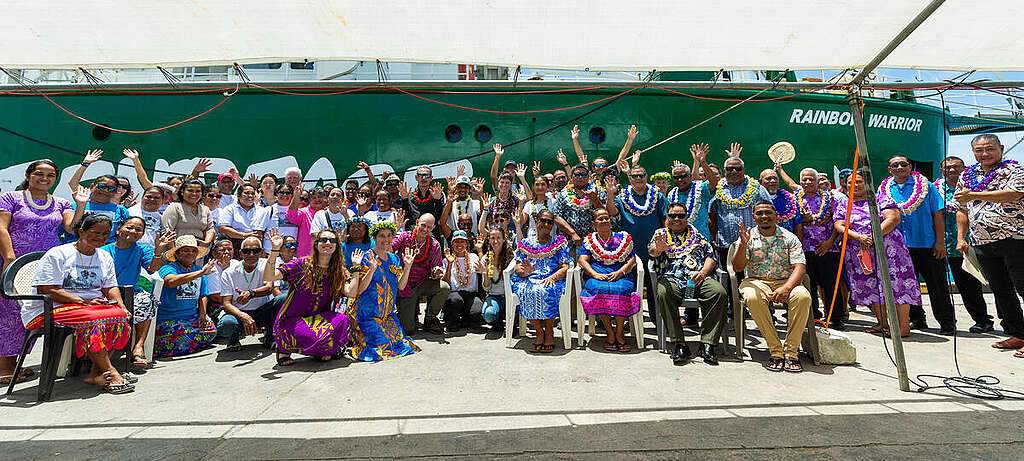
This year, the Rainbow Warrior sailed back to the Republic of the Marshall Islands, forty years after answering a call for help from the people of Rongelap, a community displaced by the fallout of U.S. nuclear testing. In 1985, when their pleas for relocation were ignored by those whose job it was to help, they turned to Greenpeace. The Rainbow Warrior carried them to safety.
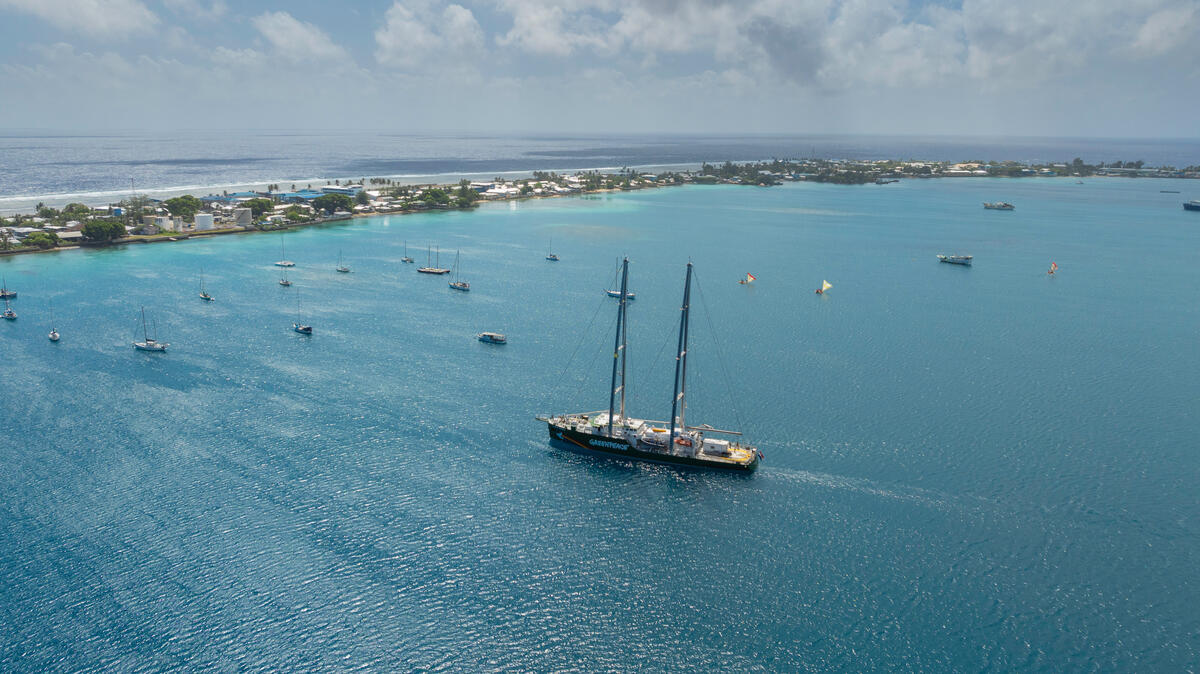
The ocean remembers. It remembers the songs of ancestors, the silence of exile, the courage of resistance—and the promise that one day, those who stood in solidarity would return.
This year, that same spirit of solidarity crossed the Pacific once more. But this time, it was not a mission; it was a homecoming. It was about reconnection.
From the moment the ship approached the atolls, it was clear: this voyage wasn’t just about our shared past. It was about the Marshallese people’s future. And the welcome they gave was more than ceremony. It was love, history, and deep recognition—offered without hesitation.
Between 1946 and 1958, 67 nuclear bombs were detonated across the Marshall Islands by the United States. Large areas, including entire communities, were contaminated. Families were displaced. Generations affected. But far from being defined by this trauma, the Marshallese community has become a force; demanding justice, protecting their culture, and facing the climate crisis with extraordinary grace and determination.
This tour, spanning the islands of Majuro, Rongelap, Enewetak, Bikini, Wotje and more, was shaped by the voices and leadership of Marshallese people. There were community ceremonies and remembrance events, meetings with government officials and church congregations, interviews, bwebwenato (story-sharing gatherings), and visits to sacred places scarred by history.
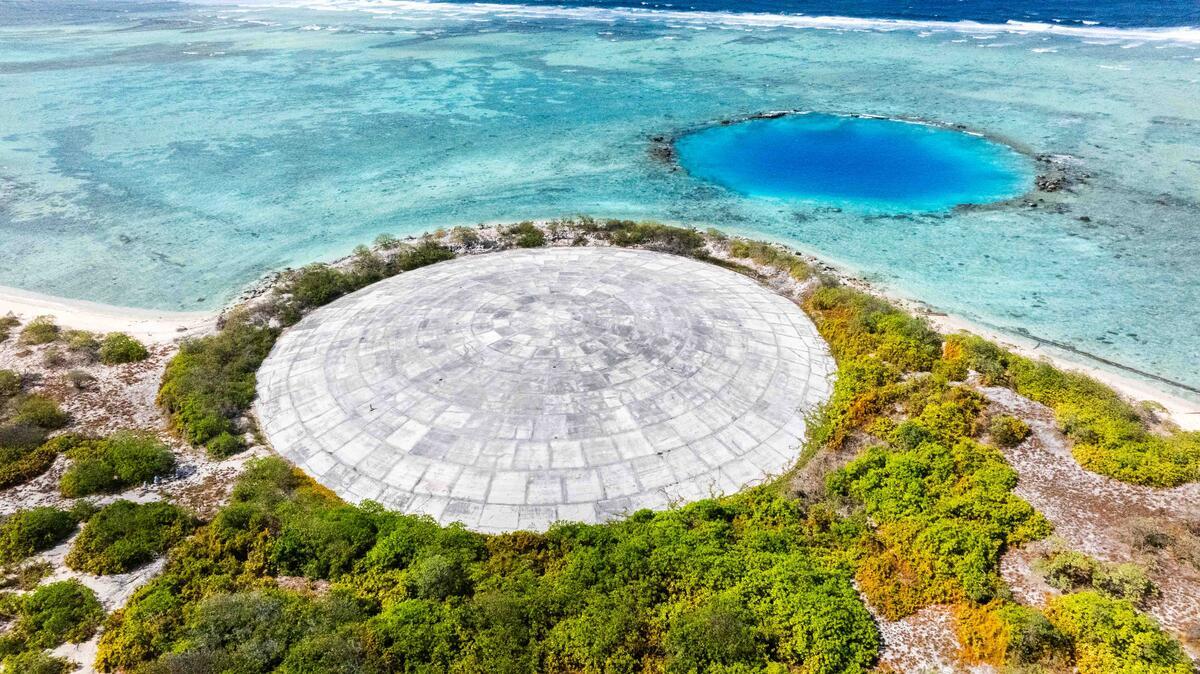
In Enewetak, the Rainbow Warrior crew stood beside the Runit Dome, also known as “the Tomb”. A cracked concrete cap holding over 85,000 cubic metres of radioactive soil and waste. These substances are not only confined to the crater—they are also found across the island’s soil, rendering Runit Island uninhabitable for all time. The Tomb is a haunting reminder of what the Marshallese people have survived. But even there, the community offered grace, laughter and an open hand. Their strength doesn’t deny pain, it transcends it.
Across the journey, the Marshallese people showed that their story is one of vision, survival and sovereignty. A story of voices that will not be silenced. Theirs is a culture that sings under the stars, that teaches through stories, that remembers, resists and reimagines a future.
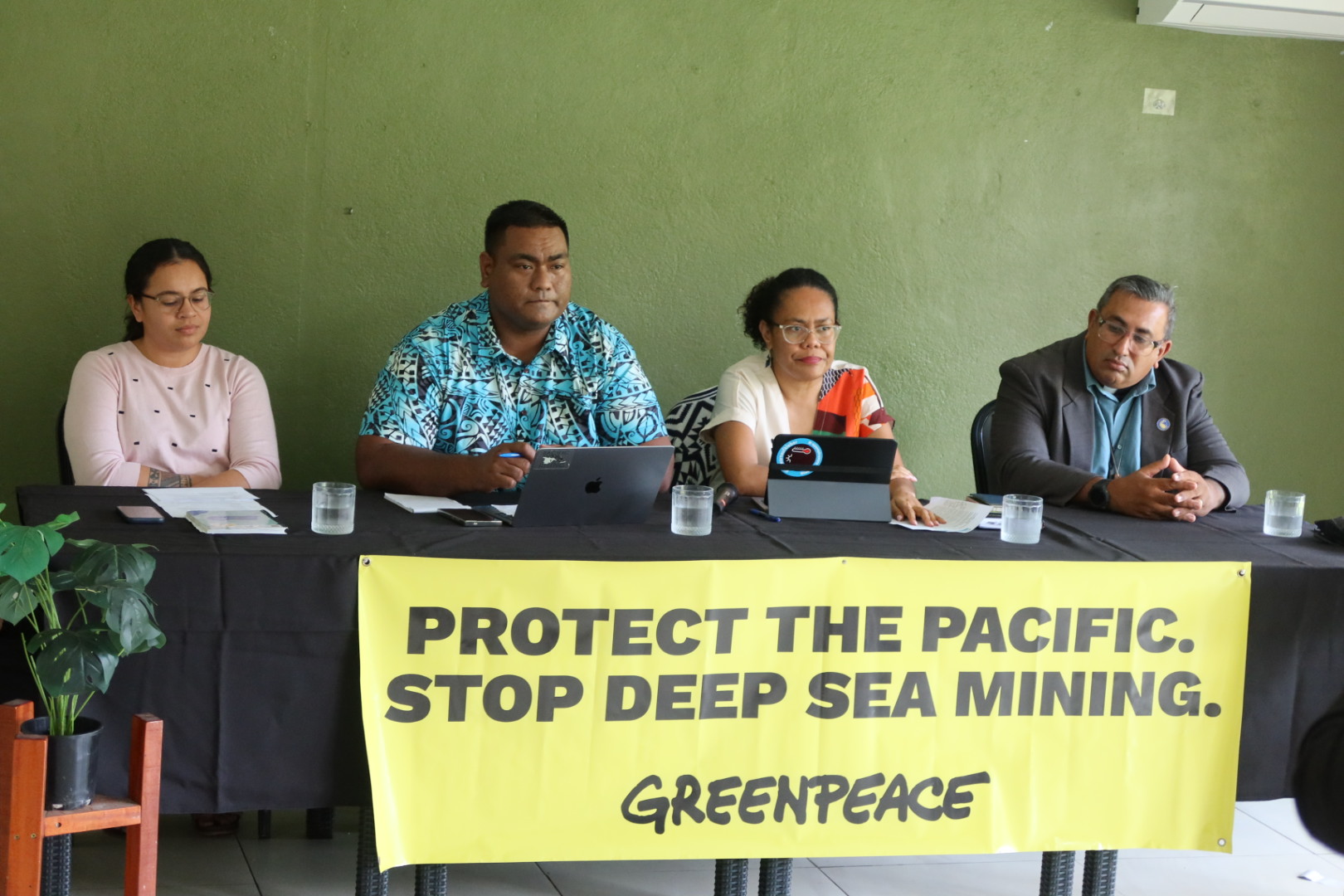
The tour deepened existing relationships with the RMI government and communities. Greenpeace scientists are working in deep partnership with Marshallese authorities to carry out independent radiation research—research that will support the country’s future petition for nuclear justice. The ship tour also created space for shared dialogue on the threat of Deep Sea Mining, with Greenpeace offering policy support and Marshallese leaders engaging in powerful discussions on protecting the ocean.
Through it all, the message was clear: the Marshall Islands are not a footnote in history. They are a powerful, living voice in the global movement for justice.
Many people reading this article have pledged a Gift in their will to Greenpeace, or are considering doing so. These gifts are not just donations. They are commitments to people like the Marshallese—those who protect their homes, hold their histories close, and fight with dignity and love for a better future.
The return to the Marshall Islands reminded us all of what solidarity truly looks like. Not a headline, but a hand held. Not a campaign, but a connection. And not a visit, but a return to family.
“This wasn’t a visit. We came home. A true homecoming. A return to family. A reconnection with a shared history. The kind where the seat has always been saved.”
Shiva Gounden, Head of Pacific at Greenpeace Australia Pacific