How we’re governed
Greenpeace Australia Pacific strives to follow the highest standards of accountability and transparency in all we do towards a green and peaceful future.
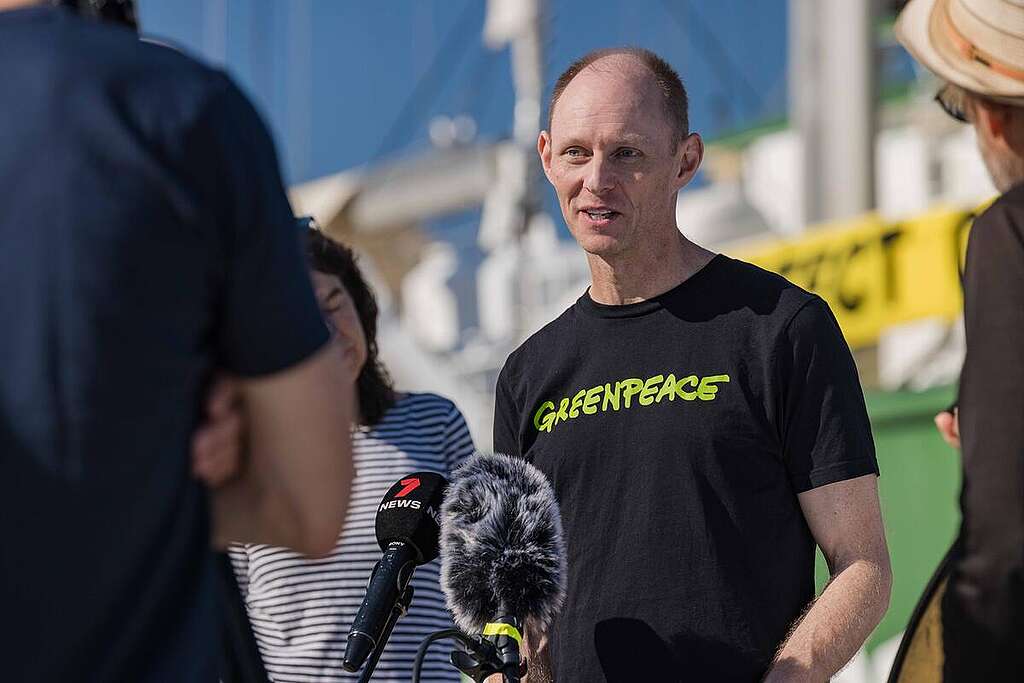
Annual Reports
Greenpeace Australia Pacific is happy to be able to report back to you on our work.
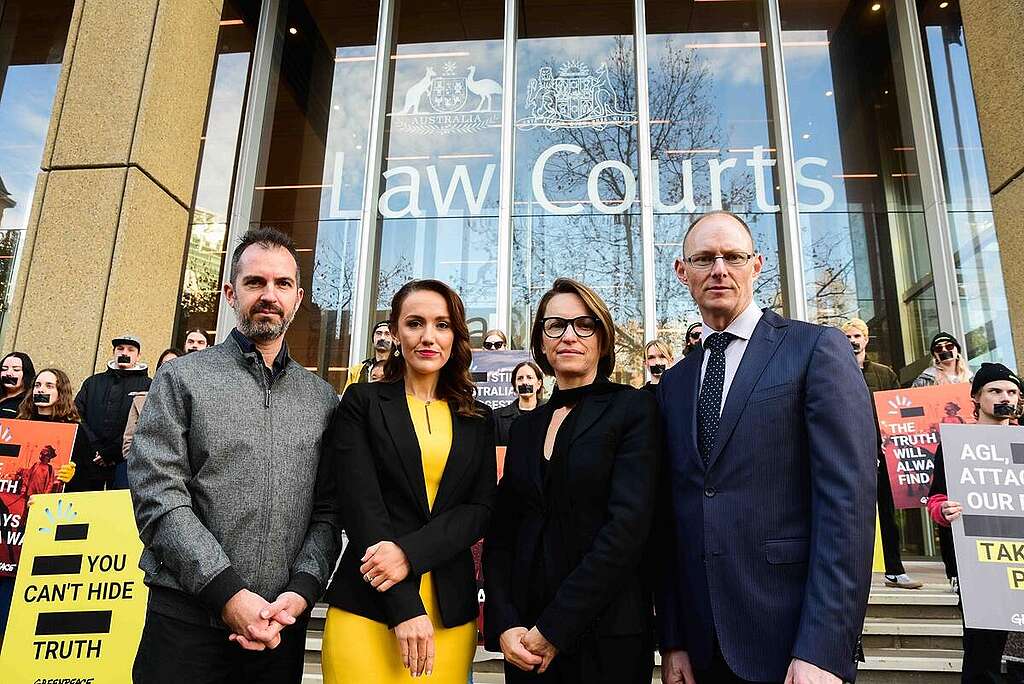
Governance Structure
Our governance structures reflect our fundamental respect for democratic principles and our need to maintain a high level of internationalism and independence. To this end we work to ensure our generous supporters – whether you take part in our actions or give through donating – know how our funds are spent.
Our governance structure is detailed in the Constitution of Greenpeace Australia Pacific Limited.
Our Constitution outlines:
- The legal obligations of Greenpeace Australia Pacific as a public company
- The role of General Assembly members
- How directors are elected and their role on the Board
- The role of the Chief Executive Officer
Board of Directors
The Board of Directors of Greenpeace Australia Pacific consists of independent non-executive directors. The Board is responsible for setting the organisation’s strategic direction and ensuring it is aligned with its mission and values.
Directors are elected by the General Assembly for a three-year period. They may hold office for a maximum of two terms unless elected to Chair, in which case one additional term may be served.
• ensure the organisation obtains and appropriately uses the resources required to carry out its objectives and sustain it
• approve the annual budget of the organisation
• approved the audited accounts
• appoint and supervise the Chief Executive Officer
• monitor the operations and activities of Greenpeace Australia Pacific
• approve organisation policy
• approve the commencement of new campaigns.
Board members

Nicolette Rubinsztein AM (Chair)
Nicolette is a respected company director, author and qualified actuary. She believes climate change is the most important challenge of our time.
Nicolette is Chair of CBHS Health and on the board of Zurich Australia. Her previous board roles include UniSuper, Class Limited, SuperEd, ASFA and the Actuaries Institute. She is also a former President of the Actuaries Institute and was awarded a Member of the Order of Australia for services to business in 2024. In her executive career, she held a number of senior strategy, product and marketing roles at the Commonwealth Bank of Australia/ Colonial First State, BT Funds Management and Towers Perrin.

Dorothy Wickham
Dot is a respected journalist and media specialist with a deep understanding of Pacific politics, culture, and communication. As the longtime host of the RAMSI national radio talkback program Talking Truth and founding editor of the Melanesian News Network, she has been a trusted voice in the region. Dot has also worked as a media consultant, advising organisations on strategy, outreach, and stakeholder engagement.

Tony Coleman
Tony is a senior actuary with a long involvement in pursuing better climate change outcomes. From 2009 to 2015 Tony was a non-executive Director of Low Carbon Australia (the Federal Govt owned forerunner of the Clean Energy Finance Corporation). Tony was also a non-executive Director of the Antarctic Climate and Ecosystem CRC from 2009 to 2018, involved in gaining a better community knowledge of the science of climate change. Tony is also a non-executive Director of Munich Re Australia and a non-executive Director of both the Royal Automobile Club of Tasmania and its wholly owned subsidiary RACT Insurance.

Suzie Shaw
Suzie Shaw is APAC CEO of the socially-led creative agency, We Are Social, heading up its 250-strong APAC team. Suzie brings to the Board nearly three decades of global communications and marketing experience, including 14 years in London, and has worked across diverse sectors such as technology, financial services, government, travel and tourism.
She is deeply committed to environmental and social causes and a champion of gender equality – Suzie founded SWIMM Australia (Senior Women in Media and Marketing). She is a thought leader on socially led marketing and reputation management as well as culture and has been named one of The Australian’s top 50 Women in Media, was featured in AdNews’ 40 under 40 and AdNews’ Women of Influence.

Luke Giuliani
Luke Giuliani has spent over 15 years working as a strategic and technology leader within startup, not-for-profit, commercial and listed environments.
He has served as non executive director of Climate Action Network Australia and Climate for Change. He also has a wealth of experience within Greenpeace’s global network, having previously served as Chief Technology Officer within Greenpeace Australia Pacific and undertaken global technology transformation programs.
His passion for learning, helping others to find their true north and building high performing cultures and teams has found a home across engineering, devops, data and insights, design, delivery, research and development, operations and cybersecurity.
Based in Melbourne, Luke is a keen cyclist, proud father, amateur squash player and avid sci-fi reader.
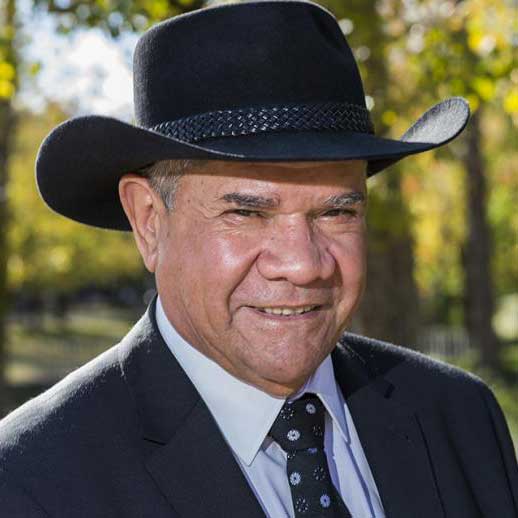
Mick Dodson AM
Mick Dodson AM is a former Australian of the year, Yawuru man, barrister, activist and professor. He is best known for his campaigns as a lawyer to secure and improve the legal rights of Aboriginal and Torres Strait Islander peoples, particularly in relation to land and native title rights. This work led to Mick being awarded the Medal of the Order of Australia in 2003 for services to the Aboriginal and Torres Strait Islander community and being named Australian of the Year in 2009.
Mick became the first Indigenous barrister to join the Victorian Bar in 1981. Since then he has served as the first Aboriginal and Torres Strait Islander Social Justice Commissioner with the Human Rights and Equal Opportunity Commission. He has served as a Director (CEO) of the Northern Land Council and as counsel assisting the Royal Commission into Aboriginal Deaths in Custody. Mick was also a member of the United Nations Permanent Forum on Indigenous Peoples as a member for the Pacific Region and served on the board of trustees of the United Nations Voluntary Fund for Indigenous Populations.

Imogen Zethoven AO
Imogen Zethoven AO is a nationally and internationally recognised environmental campaigner with postgraduate training in ecology and a Master’s in Environmental Studies. She has led some of the world’s most significant marine protection campaigns, including securing major no-take reserves in the Coral Sea and the Great Barrier Reef, for which she won the Fred M. Packard International Parks Merit Award. She has worked across Australia, Europe, Asia and the Pacific to advance climate and ocean conservation.
Imogen brings deep experience in advocacy, science communication and fundraising. She has secured major grants from international foundations, led innovative election campaigns, and worked closely with scientists to inform policy change. Her work in the Pacific, particularly on shark conservation and overfishing, reflects a long-standing commitment to environmental justice and regional collaboration.
Anna Demant
Anna Demant is a fundraising and philanthropy expert with a strong track record of securing major funding for advocacy and systemic change. As a founding Principal of First Tier, she advises for-purpose organisations on strategy and growth, with particular expertise in high-net-worth giving. She co-created and led the Scanlon Foundation’s Strength to Strength program for four years and has helped secure transformative support for initiatives such as the Murray Darling Conservation Alliance.
Anna previously spent over a decade at one of Australia’s largest family foundations, supporting social justice and environmental causes (including Greenpeace) and advocating for grantees across the donor community. She brings deep knowledge of the philanthropic sector, a passion for values-driven giving, and a lifelong commitment to supporting impactful campaigns.
Committees
The Board is supported in its function by Board Committees and working groups who provide advice and recommendations to the Board.
the Finance and Audit Committee is a standing committee of the Board responsible for reviewing and advising the Board in the following areas:
- Management and financial reporting
- Corporate risk and internal control environment
- Corporate governance
The Nominations Committee assists the Board by:
- ensuring that nominees for the General Assembly and Board which are presented to the General Assembly for election have suitable qualifications, experience, character and motivation
- providing recommendations about the desired size of the General Assembly and Board
General Assembly
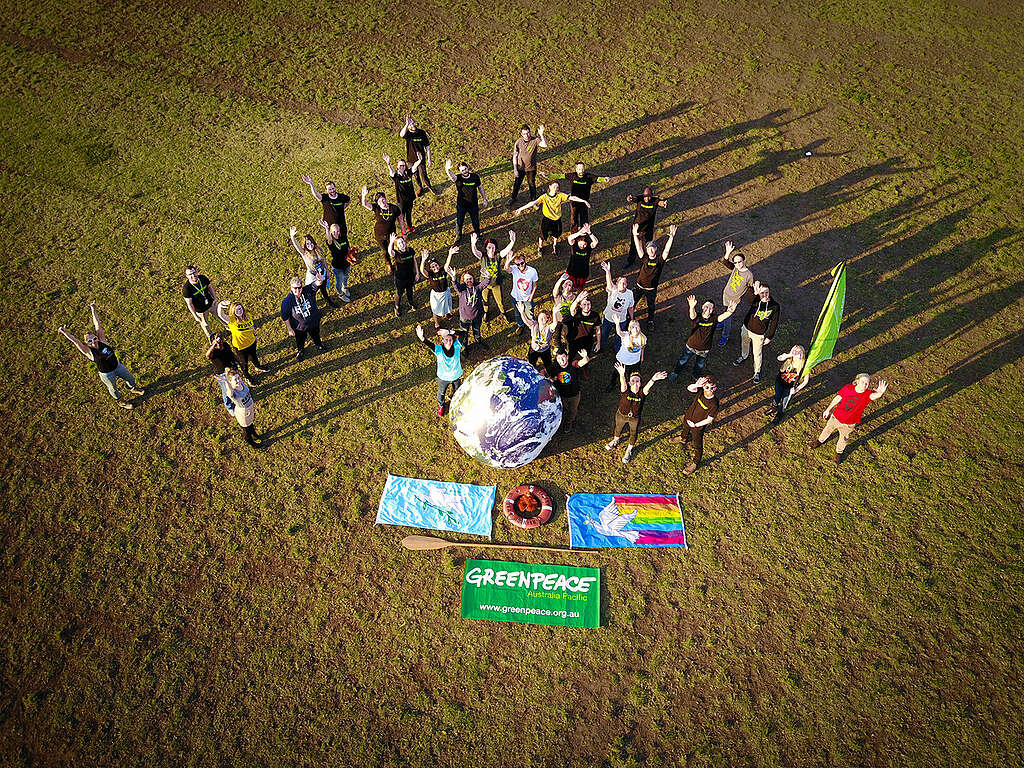
General Assembly members do not participate in the day to day operations or decision making of the organisation, but their contribution is fundamental to the effective governance of Greenpeace Australia Pacific.
The Board empower the General Assembly by:
- Communicating effectively with members
- Providing ready access to balanced and understandable information about the organisation and corporate proposals
- Making it easy to participate in general meetings.
In many respects, the General Assembly are the most ardent supporters of the organisation: their role is custodian, ambassador and advocate. Some of the things generally expected of General Assembly members include:
• Commit their time to the attendance of the Annual General Meeting (AGM)and other governance tasks entrusted to them
• Be a regular giver, and encourage others to do the same
• Amplify social content, participate and show support on digital platforms
• Abide by the General Assembly Code of Conduct
• Be a passionate guardian and advocate for a green peace
General Assembly members are the voting members of the organisation. They promote the objects of Greenpeace and agree to accept the powers and obligations set out in the Constitution of Greenpeace Australia Pacific.
This is a voluntary role that participates in oversight of the organisation through the Annual General Meeting, any extraordinary general meetings or postal ballots.
General Assembly members do not participate in the day to day operations or decision making. However they can exercise their power via a vote at the AGM on important decisions that affect the direction of the company (for example, changes to the Constitution) or express their level of satisfaction with the management of the company and the achievement of its objectives.
The main responsibilities of the General Assembly are:
• Election of the Board members
• Oversee Board performance
• Acceptance of the annual report of Greenpeace Australia Pacific
• Appointment of the external auditor
As per the Constitution, the General Assembly’s membership number is determined by the Board, with a minimum requirement of 50 people.
The commitment of a General Assembly member is to:
• Examine the documentation sent for the AGM and any other extraordinary meetings that may arise
• Remain informed of Greenpeace Australia Pacific performance and activities
• Attend the Annual General Meeting and other general meetings that may arise and vote on matters presented
• Pay the membership fee of $25
The Board may also invite General Assembly members to join Board Committees and working groups.
General Assembly members pay a membership fee of $25 per year. As per the Greenpeace Australia Pacific Constitution, the General Assembly member is subject to a limited liability in the event of winding up the company, but this liability is capped at $5.
General Assembly members bring a wide range of skills, experience and knowledge to Greenpeace. These are some of the attributes we look for:
• An enthusiasm and passion for the environment and a commitment to its preservation
• An understanding of the difference between governance and management
• An understanding of financial management principles
• Strategic and business planning and implementation skills
• An understanding of the Australian legal and/or political landscape
• Ability to interpret the vision and strategy for future growth of the organisation
• Integrity and vision
• Willingness to make a positive contribution
The General Assembly Code of Conduct is available here.
Expressions of interest
Each year we request expressions of interest to join our General Assembly. This will be advertised on the volunteer page of our website. Elections are held at the AGM which usually occurs in May.
Organisation
Greenpeace is a global campaigning network, consisting of Greenpeace International (Stichting Greenpeace Council) in Amsterdam, and 25 independent national and regional organisations across the world operating in more than 55 countries. These national/regional organisations are independent in carrying out global campaign strategies within the local context they operate within, and in seeking the necessary financial support from donors to fund this work.
Support and coordination of these global strategies is the task of Greenpeace International. Supported by a consultative international decision making process in which the national/regional Organisations are the main stakeholders, Greenpeace International co-ordinates worldwide campaigns and monitors the development of national and regional Greenpeace organisations.
Greenpeace National or Regional Offices (NROs) operate in over 55 countries around the world. There are a number of bilateral agreements that bind each Greenpeace NRO, of which Greenpeace Australia Pacific is one, to Greenpeace International. The key documents that define and describe this relationship are the following:
License Agreement: a legally binding bilateral agreement between Greenpeace International and Greenpeace Australia Pacific, through which Greenpeace International grants the specific NRO a licence to use the Greenpeace name.
Framework Agreement: a legally binding agreement between Greenpeace International and the NRO that allows the NRO to participate in the Greenpeace International Council.
Organisational Development Plan: this is primarily a planning tool. It contains the objectives and plans for the NRO for the following three years as well as Greenpeace International’s commitments and the NRO contribution to Greenpeace International. The agreement is binding and is renewed every year.
Legal Structure
As a registered charity, Greenpeace Australia Pacific Limited takes the corporate form of a public company limited by guarantee.Instead of shareholders
Greenpeace Australia Pacific has a General Assembly made up of more than 50 skilled volunteers who are the voting members. These members elect the Board. The Board in turn appoints the Chief Executive Officer who is delegated responsibility of management of the company.

Objectives
Greenpeace Australia Pacific’s constitution defines the objectives of the organisation as being to:
- Protect, preserve and enhance the natural environment; and
- Promote nuclear disarmament and peace.
Registration details
| Company Name | Greenpeace Australia Pacific Limited |
| Trading Names | Greenpeace Greenpeace Australia Pacific Limited |
| Company number | 002 643 852 |
| Australian Business Number | 61 002 643 852 |
| Registered Office | 2c Hayes Road, Rosebery NSW 2018 Australia |
| Postal Address | GPO Box 2622 Sydney NSW 2001 |
| Charitable Fund | The Greenpeace Trust |
| Taxation Concessions held | Endorsed as Gift Deductible Recipient – Item 1 of section 30-15 of ITAA 1997 Income Tax Exemption – Subdivision 50-B ITAA1997 GST concession – Division 176 NTS (GST) Act 1999 FBT Rebate – Section 123E FBTAA 1986 |