Longlining, also known as longline fishing, is a large-scale industrial fishing method that involves the use of a fishing line with thousands of baited hooks. These fishing lines can stretch over 100 kilometers in length and are set to capture a wide variety of fish species.
Longlining in the Tasman Sea Region
Longlining is the most common form of fishing in the high seas between Australia and New Zealand, including the Lord Howe Rise and South Tasman Sea areas.
Target Species in Longlining
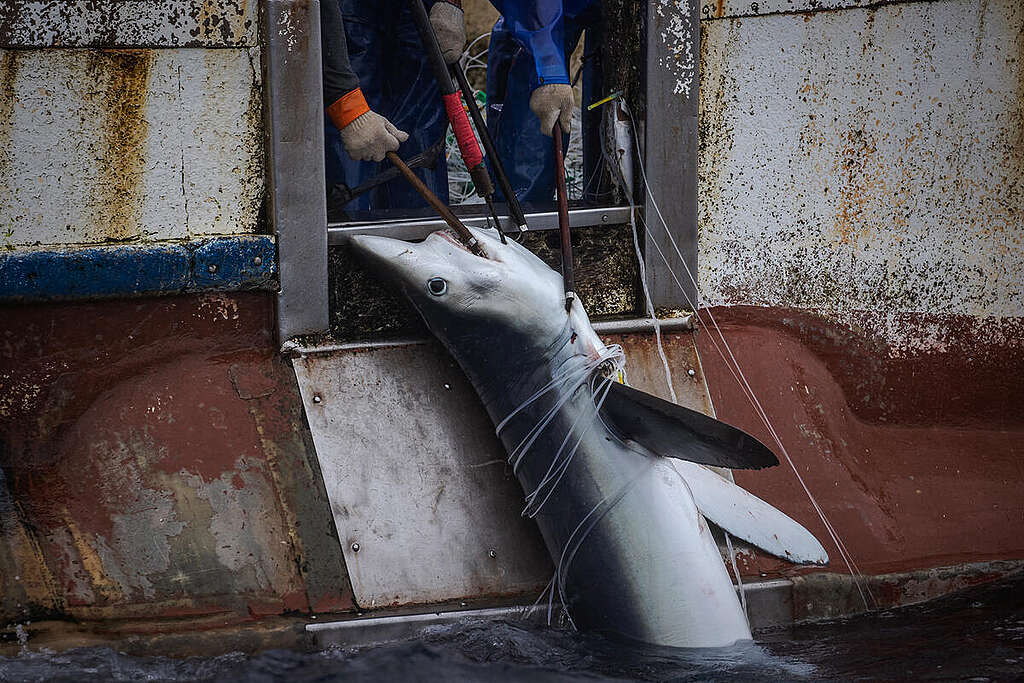
Longliners primarily aim to catch a variety of species, including different types of tuna, like southern bluefin tuna, and billfish species such as marlin and swordfish. However, longlining is not a very selective fishing method and often results in significant bycatch. This includes a range of non-target species like sharks, rays, sea turtles, marine mammals, and seabirds.
The Environmental Impact of Longlining
Longlining is causing severe harm to marine ecosystems, particularly in ecologically significant regions like the Tasman Sea. Distant water fishing fleets exploit the high seas, catching significant numbers of of sharks, seabirds, and other vulnerable species as bycatch.
Bycatch
Bycatch is the term used to describe the unintended capture of non-target species in fishing operations. Species such as sharks and seabirds are frequently caught alongside the targeted fish species, resulting in injury or death. This unintentional bycatch is contributing to the decline and endangerment of many marine species and upsetting the balance of marine ecosystems.
Key Species Impacted by Longline Bycatch in the Tasman Sea Region
In the Western and Central Pacific Fisheries Commission’s convention area, various species have been identified as vulnerable to longline bycatch, including:
- Turtles: Leatherback and loggerhead turtles
- Sharks: Oceanic Whitetip, Thresher, Shortfin and Longfin Mako, Porbeagle, Silky, Blue, Great White, Hammerhead, and Scalloped Hammerhead sharks
- Seabirds: Antarctic Giant Petrel, Black-Browed Albatross, Buller’s Albatross, Laysan Albatross, Wandering Albatross, and others
Taking Action Against Destructive Longlining Practices
To protect marine ecosystems, Greenpeace is pushing for greater international cooperation to safeguard our oceans through the Global Ocean Treaty. The Global Ocean Treaty represents a historic opportunity to protect our oceans from overfishing and industrial-scale exploitation as well as the broader impacts of pollution and climate change. The treaty aims to regulate industrial fishing practices and establish marine protected areas in the high seas, including in our region
The continued use of longlining poses significant risks to marine biodiversity, but with collective global action and strong international agreements like the Global Ocean Treaty, we can work to reverse the damage. By making sure that the Global Ocean Treaty is ratified by 60 different countries it can be brought into force. Then Government’s can propose protecting egions like the Tasman Sea.