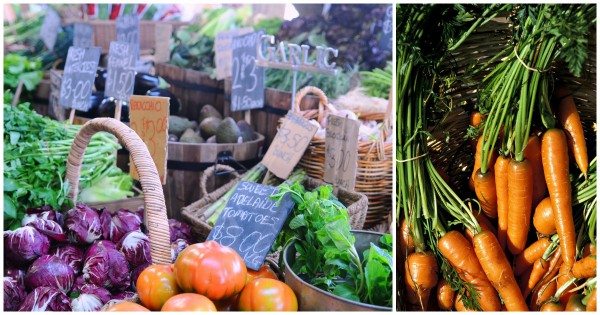
In 2015, it’s not just us who feel the pressure to look beautiful for Instagram. Our obsession with perfect-looking fruit and vegetables causes huge amounts of food waste. Here’s why ugly food is the new hottest thing in produce.

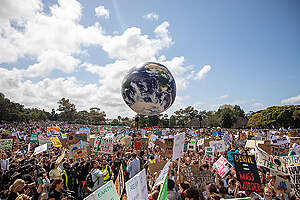
Over the past month, passionate people in the Greenpeace movement like you have been sending a strong message to the UNESCO World Heritage Committee
<a href="https://www.greenpeace.org.au/static/planet4-australiapacific-stateless/2024/02/927845b0-unesco-blog1.jpg"><img class="alignnone wp-image-10265 size-full" src="https://www.greenpeace.org.au/static/planet4-australiapacific-stateless/2024/02/927845b0-unesco-blog1.jpg" alt="UNESCO BLOG1" width="600" height="403" /></a>

Over the past month, passionate people in the Greenpeace movement like you have been sending a strong message to the UNESCO World Heritage Committee: <b>if we want to protect the world’s largest Reef for future generations, destructive coal expansion cannot go ahead in the precious Great Barrier Reef area.</b>

<!--more-->

<b>And until the threat from coal and climate change is removed, the Great Barrier Reef remains in danger.</b>

<b>What was UNESCO’s decision?</b>

The UNESCO World Heritage Committee meeting in Bonn yesterday confirmed that the Reef is still under intense scrutiny and its future hangs in the balance. The Australian Government has been given 18 months to take meaningful action to protect the Reef.

<a href="https://www.greenpeace.org.au/static/planet4-australiapacific-stateless/2024/02/4bc13e4f-unescoblog2.jpg"><img class="alignnone wp-image-10267 size-full" src="https://www.greenpeace.org.au/static/planet4-australiapacific-stateless/2024/02/4bc13e4f-unescoblog2.jpg" alt="UNESCOBLOG2" width="600" height="468" /></a>

<b>What does the Australian government have planned for its probation period?</b>

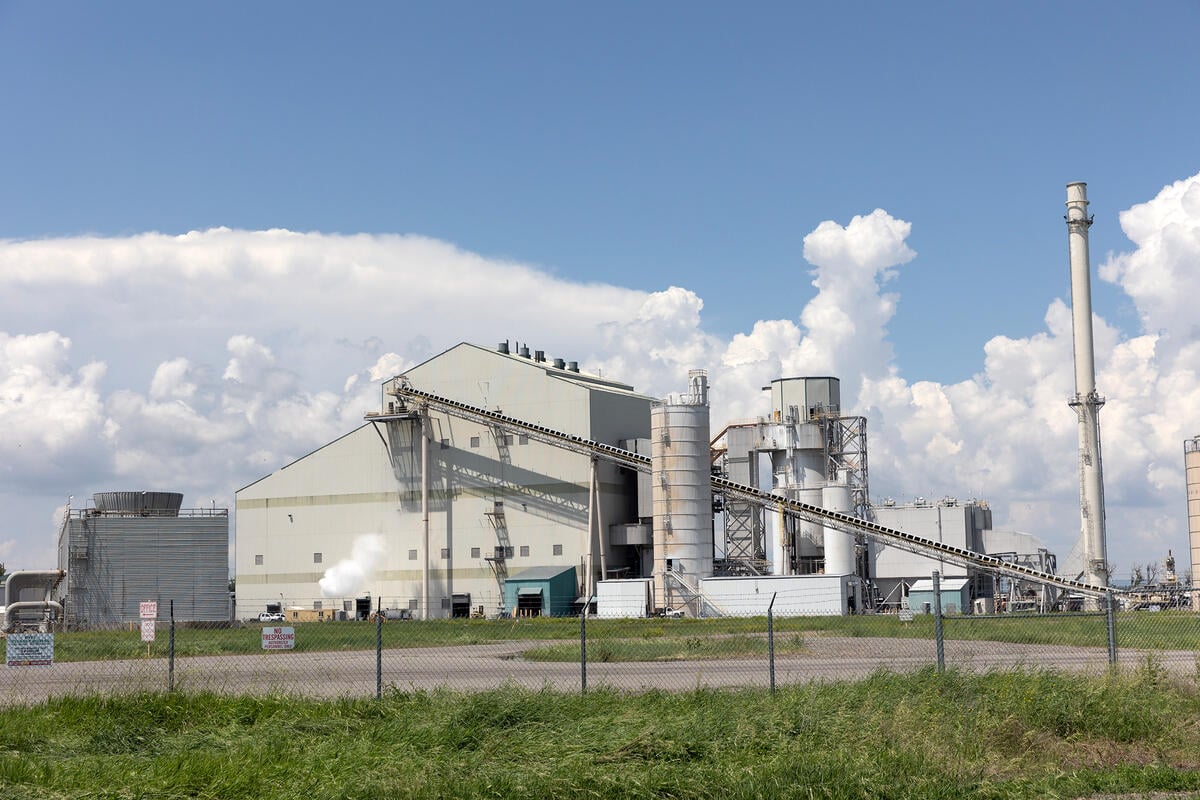
The Australian Government has approved the construction of the devastating Carmichael mega-mine. Not only would this be the largest mine Australia has ever seen, its coal would produce a shocking 130 million tonnes of deadly carbon dioxide emissions every year.

If that’s not enough - its plans would increase coal transported straight through our Great Barrier Reef World Heritage Area, having a potentially disastrous impact on the Reef’s coral and animals from collisions, accidents, spills and coal dust.

<a href="https://www.greenpeace.org.au/static/planet4-australiapacific-stateless/2024/02/c0f2a42e-unescoblog3.jpg"><img class="alignnone wp-image-10269 size-full" src="https://www.greenpeace.org.au/static/planet4-australiapacific-stateless/2024/02/c0f2a42e-unescoblog3.jpg" alt="UNESCOBLOG3" width="600" height="397" /></a>

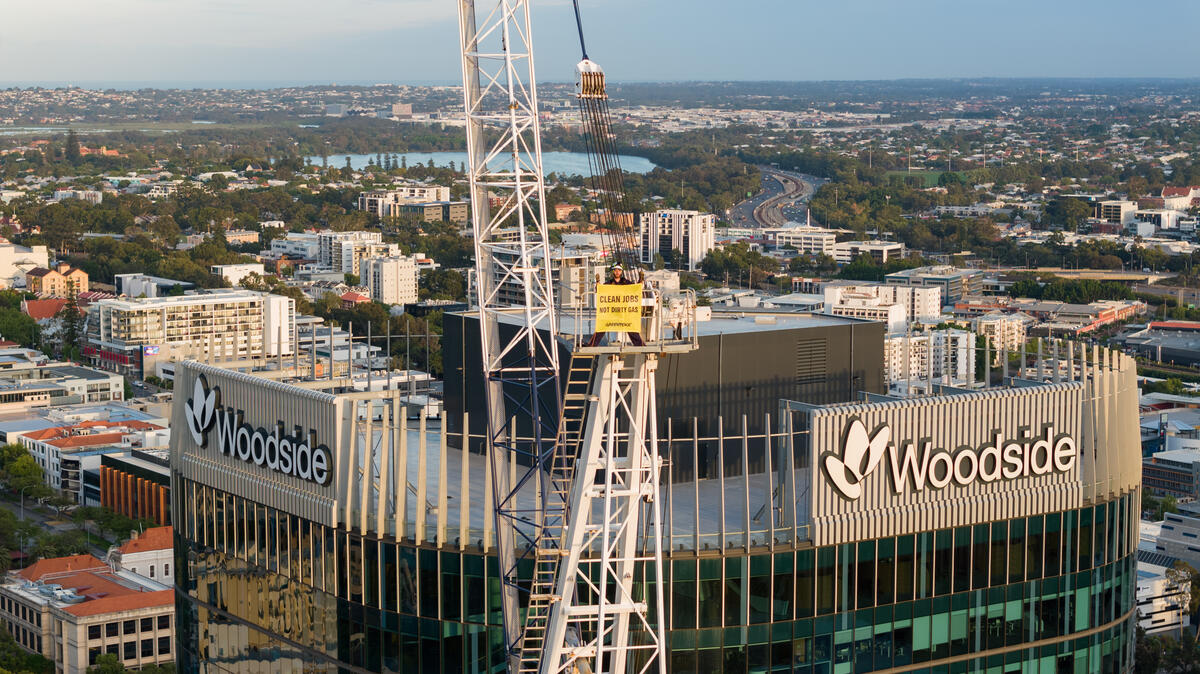
<strong><b>Until the threat of massive coal mine and port expansion is removed, any claims by the Australian Government that it is protecting the Reef are a sham. </b></strong>The government has plan to protect the Reef - but it will not stop the building of a massive “carbon bomb” coal mine in the Galilee Basin, nor the expansion of the Abbot Point port to service it.<strong> Its<b> plan doesn’t even properly address the biggest threat to the Reef - climate change.</b></strong>

Prime Minister Tony Abbott and the Australian Government are alone on the world stage in their relentless support for the coal industry and refusal to take seriously the threat of climate change. It’s time for Australian leaders to show some courage, cancel the Carmichael megamine licence and invest in real, sustainable jobs for the Reef.

<strong><b>There’s no reason to go ahead with these Reef-wrecking plans</b></strong>

The science is clear: there can either be coal expansion or a healthy Reef - but not both. And scientists aren’t the only ones who chose coral over coal - an opinion poll in Australia showed that 85% of Australians would rather see more protection for the Reef than the expansion of coal.

<a href="https://www.greenpeace.org.au/static/planet4-australiapacific-stateless/2024/02/c86f55c1-unescoblog4.jpg"><img class="alignnone wp-image-10268 size-full" src="https://www.greenpeace.org.au/static/planet4-australiapacific-stateless/2024/02/c86f55c1-unescoblog4.jpg" alt="UNESCOBLOG4" width="600" height="398" /></a>

<strong><b>If that’s not enough - Reef-wrecking coal projects are also a terrible investment. </b></strong>The coal industry is in global decline, with orders and prices falling massively and projected to continue to do so. Eleven international financial institutions have said that they will not invest in the proposed Carmichael mine and Abbot Point port expansion.

<strong><b>It seems obvious that the project is a bad idea - but it’s not over yet. There are still banks and financial institutions around the world that could put money into this disastrous mine and port.</b></strong>

The millions of people around the world who are supporting the global campaign to save the Reef will not forgive any bank that back its destruction because they were too short sighted or too deeply in the pocket of the coal industry to make the right choice. <b><a href="http://takeanotherlook.gp/?petition">We’re not giving up on the Reef - and neither should you. Join the movement to save the Reef now.</a></b>

According to the Food and Agriculture Organization of the United Nations (UNFAO), roughly one third of food is wasted globally. When you take into account the energy, land, water, effort, transport, fuel and packaging that make up the modern food industry – it’s clear our wasteful practices have a massive toll on the earth.

In Western countries, much of our food waste occurs as a result of poor composting practices, wastefulness, cosmetic selection by farmers and supermarkets, and inefficient supply chains – all of which are avoidable.

Australians alone let $8 billion worth of edible food hit the bin every year. There’s plenty we can do to stop food waste after we purchase produce, but we can also change the way our supermarkets work to prevent food being lost before it even makes it to our shelves. Here’s why we should try.
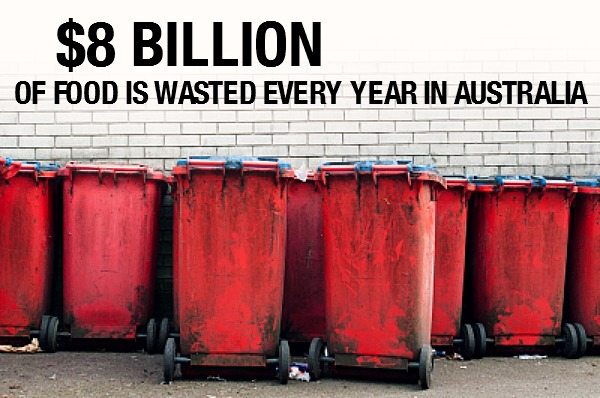
Australians waste $8 billion worth of food every year

1. Food waste = massive carbon emissions

When we waste food, we’re also wasting all the energy it took to produce it. Alongside the carbon emissions of that wasted energy are the climate-changing effects of the methane emitted by rotting food.

The UNFAO estimates the carbon footprint of food produced and not eaten to be 3.3 gigatonnes of CO2 equivalent. That means that if the world’s wasted food became its own disgusting island – it would be the third biggest contributor to climate change globally, topped only by USA and China.

2. Food waste also means water waste

According to NPR, the 1.3 billion tonnes of  food wasted globally amounts to 170 trillion litres of water each year. The UNFAO says the ‘blue water footprint’ of global food waste – that is, the consumption of surface and groundwater resources – is equivalent to the annual water discharge of the Volga River, or three times as much as Lake Geneva.

3. Driving up food prices, growing food inequality

In developing countries, food waste is more likely a result of insufficient refrigeration and supply chain issues. But global food waste contributes to the rising food prices that make it difficult for low-income families to afford food.

As UNFAO Director-General José Graziano da Silva said, “We simply cannot allow one-third of all the food we produce to go to waste or be lost because of inappropriate practices, when 870 million people go hungry every day.”
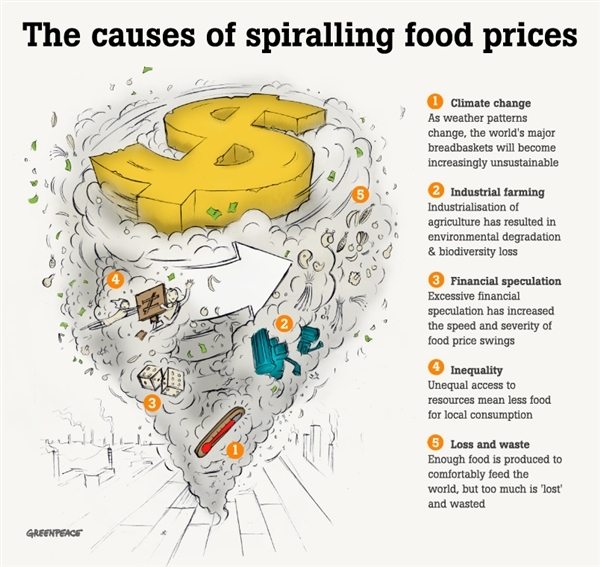
47462_85132

Enough food is already produced in the world to feed every human being on the planet comfortably, and further gains could be achieved to feed future generations through the application of agro-ecological farming practices.

4. When we waste food, we’re stopping food from being produced

It’s not just consumers who are affected by food waste. Uneaten food also accounts for the misuse of almost 1.4 billion hectares of land – nearly 30% of the world’s agricultural land area.

In Australia, Coles and Woolworths have the lion’s share of the produce market, responsible for 45% of fruit and vegetable purchases. These massive supermarket chains can forecast consumer demand and ask for crops from Australian farmers accordingly.

That means if we start buying more kale, we’ll get it – but it also means that if we stop buying bruised bananas, they’ll never make it onto the shelf. The ABC reported that in 2010, up to one third of Queensland’s banana crop was thrown away because it was thought to be too ugly to sell.
Shopper in supermarket

The good news is that supermarkets are starting to listen. Harris Farm and Woolworths have both recently started initiatives to sell the ugly fruit and vegetable to welcoming homes, and people around the world are speaking up about food waste.

You can act too. It’s time to prioritise our farmers, climate, and world over having the perfectly spherical orange. Choose the dented apples at your supermarket and carry them home with pride. Heck, take a photo of your ugly fruit and vegetables and upload it straight to Instagram! You can use a filter. We won’t tell.