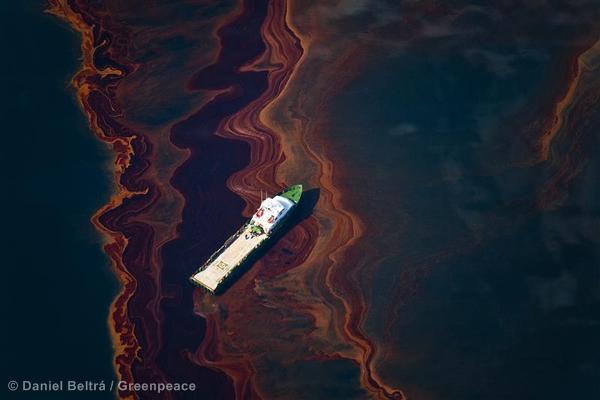
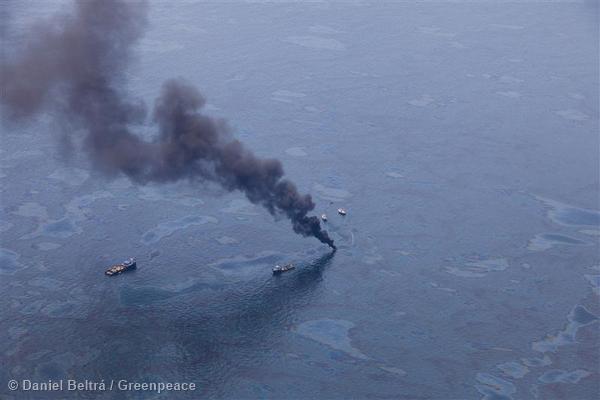
5 years ago, the BP Deepwater Horizon oil rig exploded in the Gulf of Mexico, spewing 210 million gallons of crude oil. These Greenpeace photos from 2010 reveal the devastating mark the BP oil spill disaster left on our planet.

Gulf residents and wildlife continue to reel from the impacts of BP’s negligence. Coastal residents are struggling to maintain their livelihoods and culture, while they wrestle with health problems from exposure to oil and toxic chemicals.

Oil from Oil Rig Disaster
Boats try unsuccessfully to clean oil from the ocean, near the site of the Deepwater Horizon disaster.
Oil from Oil Rig Disaster
Burning Oil from Oil Rig Disaster
Oil from Oil Rig Disaster
A tanker in the area where oil is still discharging from the Deepwater Horizon wellhead.
Burning Oil from Oil Rig Disaster
Fire and smoke rise from a controlled burn of oil on the surface of the Gulf of Mexico near BP's Deepwater Horizon spill source.
Fire and smoke rise from a controlled burn of oil on the surface of the Gulf of Mexico near BP’s Deepwater Horizon spill source.
<!-- wp:paragraph -->
<p>Are you concerned about the environment? Sometimes it can seem like our planet is being devastated at a rate we’ll never be able to recover from. Luckily, the impact we make at home and with other members of our communities can trigger a ripple that sends waves of change through the world.</p>
<!-- /wp:paragraph -->

<!-- wp:paragraph -->
<p>Here are 9 things you can do by yourself and in your neighbourhood to help transform the world this World Environment Day.</p>
<!-- /wp:paragraph -->

<!-- wp:heading -->
<h2 class="wp-block-heading">1. Join the global call to save the Great Barrier Reef</h2>
<!-- /wp:heading -->

<!-- wp:paragraph -->
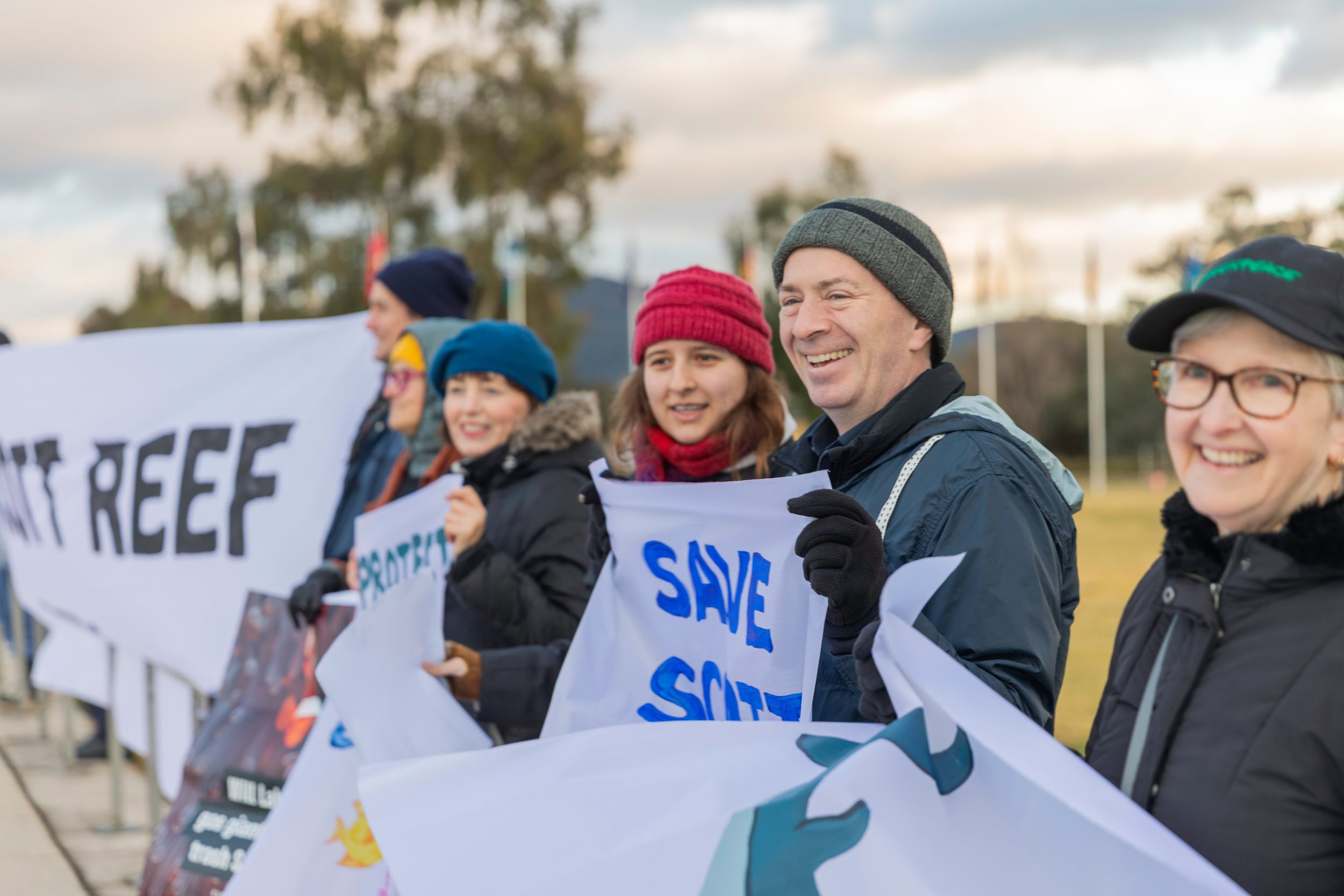
<p>Did you know the Great Barrier Reef is the world’s largest reef ecosystem, that it is home to more plants and animals than any other ecosystem, and that right now, it’s at risk from the coal industry?</p>
<!-- /wp:paragraph -->

<!-- wp:paragraph -->
<p>Not everyone can speak up about this - but you can</p>
<!-- /wp:paragraph -->

<!-- wp:heading -->
<h2 class="wp-block-heading">2. Clean up a place you love</h2>
<!-- /wp:heading -->

<!-- wp:paragraph -->
<p>There’s lots of ways you can have fun and act on plastic pollution in your community at the same time. You can join an organised initiative in your local area, like a <a href="http://responsiblerunners.org/">Responsible Runners group</a>.</p>
<!-- /wp:paragraph -->

<!-- wp:paragraph -->
<p>Or, if you’d prefer, fly solo and <a href="http://www.take3.org.au/">take the Take3 challenge</a>: pick up three pieces of litter from all the beaches, rivers, parks or streets you come across in your community.</p>
<!-- /wp:paragraph -->

<!-- wp:image {"align":"center","id":10045,"linkDestination":"custom"} -->
<figure class="wp-block-image aligncenter"><a href="http://www.take3.org.au/"><img src="https://www.greenpeace.org.au/static/planet4-australiapacific-stateless/2024/02/aeef6029-bottlesonbeach.jpg" alt="bottlesonbeach" class="wp-image-10045"/></a></figure>
<!-- /wp:image -->

<!-- wp:heading -->
<h2 class="wp-block-heading">3. Become a recycling know-it-all<strong><strong> </strong></strong></h2>
<!-- /wp:heading -->

<!-- wp:paragraph -->
<p>Not sure what can be recycled, and where? Read up on <a href="https://www.greenpeace.org.au/blog/plastic-pollution-recycling/">plastic recycling in this blog</a>, and check out the <a href="http://planetark.org/">resources on the Planet Ark website</a> to become a recycling nerd.</p>
<!-- /wp:paragraph -->

<!-- wp:paragraph -->
<p>Then, use your wisdom for good and teach your friends and family what you’ve learnt. More people would think twice about littering if they knew the impact of plastic pollution on our waterways, oceans and marine life. <b>Share the information you learn and try to positively influence the plastic use and recycling habits of those around you.</b></p>
<!-- /wp:paragraph -->

<!-- wp:heading -->
<h2 class="wp-block-heading">4. Take action on plastic pollution</h2>
<!-- /wp:heading -->

<!-- wp:paragraph -->
<p>Recently, <a href="https://www.greenpeace.org.au/blog/reverse-vending-machine/">the NSW government made a commitment to implement a 10c ‘cash for containers’ scheme</a>, and after pressure from thousands of Australians, the Queensland government has announced they will also begin investigating this scheme!</p>
<!-- /wp:paragraph -->

<!-- wp:image {"align":"center","id":10046,"linkDestination":"custom"} -->
<figure class="wp-block-image aligncenter"><a href="https://www.greenpeace.org.au/action/?cid=85&src=BLOG"><img src="https://www.greenpeace.org.au/static/planet4-australiapacific-stateless/2024/02/2e8e4706-14-026-cdl-fb-share-stop-pl.jpg" alt="14-026-CDL-FB-SHARE-Stop-Pl" class="wp-image-10046"/></a></figure>
<!-- /wp:image -->

<!-- wp:heading -->
<h2 class="wp-block-heading">5. Check your products for microbeads<strong><strong> </strong></strong></h2>
<!-- /wp:heading -->

<!-- wp:paragraph -->
<p><b>Often the use of microbeads – tiny plastic beads found in many cosmetics and toiletries – is advertised, but they can also be hiding in the ingredients list. </b></p>
<!-- /wp:paragraph -->

<!-- wp:image {"align":"center","id":10044,"linkDestination":"custom"} -->
<figure class="wp-block-image aligncenter"><a href="http://get.beatthemicrobead.org/#sthash.M9zPl1uU.dpuf"><img src="https://www.greenpeace.org.au/static/planet4-australiapacific-stateless/2024/02/f5474199-ce8j2onwgaa-v2u.jpg" alt="CE8J2ONWgAA-V2u" class="wp-image-10044"/></a><figcaption class="wp-element-caption"><i>Image by Steve Greenberg, Cagle Cartoons - <a href="https://twitter.com/5gyres">via 5Gyres on Twitter</a></i></figcaption></figure>
<!-- /wp:image -->

<!-- wp:paragraph -->
<p>Luckily, the folks at <a href="http://get.beatthemicrobead.org/#sthash.M9zPl1uU.dpuf">Beat the Microbead have made an app</a> to help you find out if these tiny pollutants are in your favourite products.</p>
<!-- /wp:paragraph -->

<!-- wp:heading -->
<h2 class="wp-block-heading">6. Stand with the Wangan and Jagalingou traditional owners</h2>
<!-- /wp:heading -->

<!-- wp:paragraph -->
<p>The traditional owners of the land in Queensland’s Galilee Basin, the Wangan and Jagalingou people, are calling for support for their campaign to protect and defend their connection to Country.</p>
<!-- /wp:paragraph -->

<!-- wp:heading -->
<h2 class="wp-block-heading">7. Support the campaign to end dirty palm oil</h2>
<!-- /wp:heading -->

<!-- wp:paragraph -->
<p>The unsustainable production of palm oil is devastating for the world’s forests, animals and climate - and unfortunately, helps bring us many of the products we use and love everyday.</p>
<!-- /wp:paragraph -->

<!-- wp:image {"align":"center","id":7107,"linkDestination":"custom"} -->
<figure class="wp-block-image aligncenter"><a href="http://www.greenpeace.org/australia/en/what-we-do/forests/Protect-Paradise/Tiger-Challenge/"><img src="https://www.greenpeace.org.au/static/planet4-australiapacific-stateless/2024/02/600a3c5d-11.jpg" alt="Orangutan Feeding Platform near Tanjung Puting National Park" class="wp-image-7107"/></a></figure>
<!-- /wp:image -->

<!-- wp:paragraph -->
<p><b>But it doesn’t have to be like this. The palm oil industry is in rapid transformation. <a href="https://www.greenpeace.org.au/action/?cid=78&src=BLOG">We're working with the Palm Oil Innovation Group to create industry change - join the global forests campaign to be part of it.</a></b></p>
<!-- /wp:paragraph -->

<!-- wp:heading -->
<h2 class="wp-block-heading">8. Make a stand for sustainable fishing</h2>
<!-- /wp:heading -->

<!-- wp:paragraph -->
<p>Around the globe, unsustainable fishing practices are destroying ocean habitats and threatening fish species.</p>
<!-- /wp:paragraph -->

<!-- wp:image {"align":"center","id":7505,"linkDestination":"custom"} -->
<figure class="wp-block-image aligncenter"><a href="http://www.greenpeace.org/australia/en/what-we-do/oceans/Take-action/canned-tuna-guide/"><img src="https://www.greenpeace.org.au/static/planet4-australiapacific-stateless/2024/02/ea196eec-supertrawler.jpg" alt="The Afrika Super Trawler" class="wp-image-7505"/></a></figure>
<!-- /wp:image -->

<!-- wp:paragraph -->
<p><b>The good news is that pressure from the Greenpeace community helped transform the canned tuna available in Australian supermarkets</b> - so now you can <a href="https://www.greenpeace.org.au/article/how-to-find-the-best-canned-tuna-our-guide/">use our Canned Tuna Guide</a><a href="http://www.greenpeace.org/australia/en/what-we-do/oceans/Take-action/canned-tuna-guide/"> </a>to buy sustainably caught pole and line tuna.</p>
<!-- /wp:paragraph -->

<!-- wp:heading -->
<h2 class="wp-block-heading">9. Become one of the 7 million global citizens protecting the Arctic</h2>
<!-- /wp:heading -->

<!-- wp:paragraph -->
<p>There are some places on this Earth that are so important and fragile they should be protected at all costs. The Arctic is one of those places.</p>
<!-- /wp:paragraph -->

<!-- wp:paragraph -->
<p>Now, over 7 million passionate people from around the world have signed on to become Arctic Defenders! <b>With companies like Shell trying to invade the precious Arctic and drill for oil, we need the biggest, strongest movement possible to save it.</b></p>
<!-- /wp:paragraph -->

<!-- wp:image {"align":"center","id":10043,"linkDestination":"custom"} -->
<figure class="wp-block-image aligncenter"><a href="http://savethearctic.org/en-AU/?src=BLOG"><img src="https://www.greenpeace.org.au/static/planet4-australiapacific-stateless/2024/02/2179c128-sta_gp_openspace_v4.jpg" alt="sta_GP_openspace_v4" class="wp-image-10043"/></a></figure>
<!-- /wp:image -->
The wake of a ship is visible after it cut through the oil on the surface of the ocean near the site of the Deepwater Horizon disaster in the Gulf of Mexico.
Ships are dwarfed by the amount of oil on the surface of the ocean as they work to contain the oil near the site of the Deepwater Horizon disaster in the Gulf of Mexico.
A helicopter flies over oil on the surface of the ocean near the site of the Deepwater Horizon disaster in the Gulf of Mexico.
This image was taken 3300ft 13 miles East of the location where the Deepwater Horizon wellhead sank. Oil is visible on the sea surface.
A group of baby brown pelicans, completely covered in oil, wait in a holding pen to be treated as part of the cleaning process at the Fort Jackson International Bird Rescue Research Center in Buras.
Greenpeace activist Joao Talocchi shows his hands covered in crude oil washed ashore on Casse-tete Island on the Louisiana gulf coast near the site of the Deepwater Horizon disaster.
Workers try to remove oil from the Deepwater Horizon wellhead off the beach in Grand Terre Isle in Barataria Bay.
Scenes from the tiny community of Grand Isle on the Louisiana gulf coast near the site of the Deepwater Horizon disaster. The beach is closed to the public as clean-up workers scrap oil and tar balls from the sand.

We have to learn from the BP oil spill

Please share these images so that we never forget. A disaster of this magnitude doesn’t have to happen to us here, or to anyone, anywhere, ever again – especially not in the fragile Arctic. Shell plan to drill in the Arctic this summer – click here to raise your voice against the riskiest drilling yet.