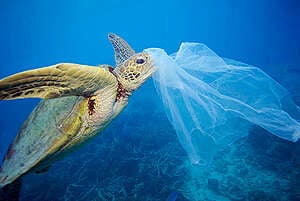
You could save a turtle’s life by using less plastic and making sure your garbage is properly managed. In the North Pacific is an area the size of Turkey of floating plastic rubbish. It is rubbish from the land that is polluting our oceans, choking and trapping millions of fish and animals. We can keep plastic trash out of our ocean and save ocean life.
You could save a turtle’s life by using less plastic and making sure your garbage is properly managed. In the North Pacific is an area the size of Turkey of floating plastic rubbish. It is rubbish from the land that is polluting our oceans, choking and trapping millions of fish and animals. We can keep plastic trash out of our ocean and save ocean life.
Take a walk along almost any beach anywhere in the world and washed ashore will almost certainly be either plastic bags and bottles, or containers. Perhaps plastic drums or expanded polystyrene packing. All too often there are polyurethane foam pieces, pieces of polypropylene fishing net and discarded lengths of rope. Together with traffic cones, disposable lighters, tyres and even toothbrushes, this plastic trash has been casually thrown away on land or at sea and has been carried ashore by wind and tide.
One of the things that make plastic so heavily used domestically and commercially – its durability – also makes it a major problem for our oceans, and will continue to do so for generations. Around 100 million tonnes of plastic are produced each year, of which about 10 million tonnes ends in the sea. About 80% of it comes from land.
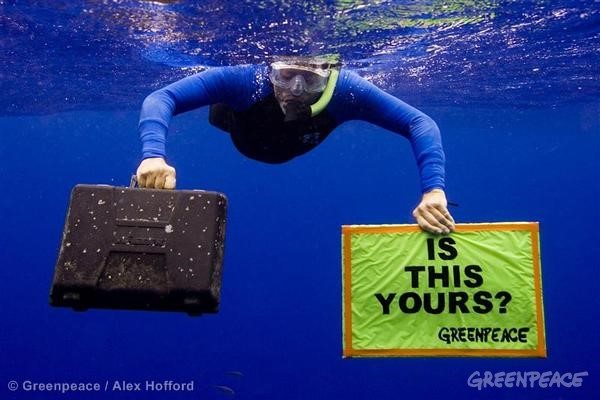
The larger items are the visible signs of a much bigger problem. At sea and on shore under the influence of sunlight, wave action and mechanical abrasion these larger items slowly break up into smaller pieces. Plastic doesn’t break down like natural materials – it doesn’t go away, it just goes from being a floating bottle to tiny plastic particles that are easily eaten by fish and other marine species or simply spread even further afield. A single one-litre bottle could break down into enough small fragments to put one on every mile of beach in the entire world.
Small plastic pellets aren’t just the result of natural erosion. Cargo ships are increasingly carrying packing cases using small plastic pellets as stuffing and these are liberally dispersed across the oceans when drum-loads or even container loads are lost at sea. The pellets are frequently found during beach clean-ups, but also at sea in areas where winds and currents are weak.
![<!-- wp:paragraph -->
<p>Welcome to megafauna highway and the longest-fringing coral reef in the world, Ningaloo Reef. Home to some of the most interesting wildlife in our oceans, let's take a dive in and take a closer look at some of fascinating species that calls this place home:</p>
<!-- /wp:paragraph -->
<!-- wp:image {"className":"wp-block-image size-large"} -->
<figure class="wp-block-image size-large"><img src="https://www.greenpeace.org.au/static/planet4-australiapacific-stateless/2024/02/a97cc466-gp0stw9pa_medium_res_with_credit_line.jpg" alt="Whale Shark in Ningaloo Reef, Exmouth|Corals in Ningaloo Reef, Exmouth, Western Australia|Corals in Ningaloo Reef, Exmouth, Western Australia|Wildlife at Ningaloo Reef|Whale Shark around Ningaloo Marine Park|Corals in Ningaloo Reef, Exmouth, Western Australia|Dugongs and Dolphins in Western Australia|Humpback Whales along Ningaloo Coastline in Western Australia|Turtle Hatchlings near Ningaloo Reef|Corals in Ningaloo Reef, Exmouth, Western Australia|Humpback Whale Mother and Calf in Western Australia"/><figcaption class="wp-element-caption">Whale shark seen during Greenpeace Rainbow Warrior documentation trip off Exmouth, Western Australia.</figcaption></figure>
<!-- /wp:image -->
<!-- wp:paragraph -->
<p>Stretching over 260 kilometres along the west coast of Australia, UNESCO heritage-listed Nyinggulu or Ningaloo Reef (which translates to “deep water” by the Traditional Owners of the land) is the longest-fringing coral reef in the world. </p>
<!-- /wp:paragraph -->
<!-- wp:paragraph -->
<p>Considered one of the planet's largest biologically diverse marine ecosystems and a highway for megafauna, Ningaloo is home to some of the most interesting wildlife in our oceans. So to help us celebrate this World Animal Day, here are 5 fascinating facts you may not know about the wildlife that calls the world's largest-fringing coral reef home:</p>
<!-- /wp:paragraph -->
<!-- wp:heading -->
<h2 class="wp-block-heading">Say hello to 6 out of the world's 7 marine turtles:</h2>
<!-- /wp:heading -->
<!-- wp:image {"id":81522,"align":"none","className":"wp-image-81522"} -->
<figure class="wp-block-image alignnone wp-image-81522"><img src="https://www.greenpeace.org.au/static/planet4-australiapacific-stateless/2024/02/be2c9103-gp1sx0d8_medium_res_with_credit_line-2.jpg" alt="Green Turtle hatchlings begin to erupt from a nest site as the sun sets and the temperature drops on a beach near Ningaloo Reef in Western Australia." class="wp-image-81522"/><figcaption class="wp-element-caption">A number of Green Turtle hatchlings begin to erupt from a nest site as the sun sets and the temperature drops on a beach near Ningaloo Reef in Western Australia.</figcaption></figure>
<!-- /wp:image -->
<!-- wp:paragraph -->
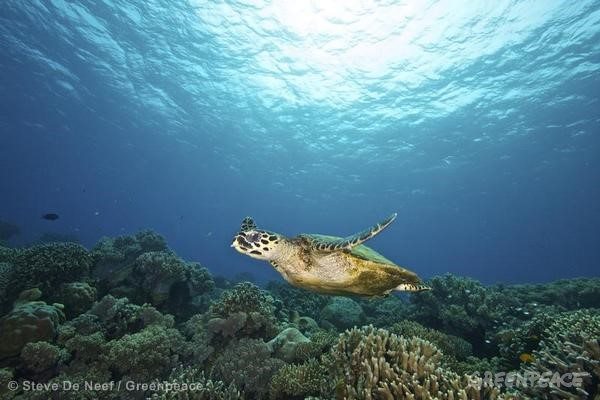
<p>Did you know that more than 3,000 species of marine life, including 200 coral, 500 reef fish, 600 crustaceans, and 1,000 marine algae call Ningaloo Reef home sweet home? Not to mention 6 out of the world’s 7 species of marine turtles, 3 of which (the endangered green, loggerhead and critically endangered hawksbill turtle) call the reef their home year-round. This leads to the wonderful phenomenon of approximately 10,000 turtle nests dug each year along the Ningaloo Coast! Egg-cellent.</p>
<!-- /wp:paragraph -->
<!-- wp:heading -->
<h2 class="wp-block-heading">And the highest density of humpback whales in the Southern Hemisphere:</h2>
<!-- /wp:heading -->
<!-- wp:image {"id":81521,"align":"none","className":"wp-image-81521"} -->
<figure class="wp-block-image alignnone wp-image-81521"><img src="https://www.greenpeace.org.au/static/planet4-australiapacific-stateless/2024/02/b45e2115-gp1sxhhr_medium_res_with_credit_line-1.jpg" alt="Aerial shot of humpback whales migrating along the Ningaloo Coastline in Western Australia." class="wp-image-81521"/><figcaption class="wp-element-caption">Aerial shot of humpback whales migrating along the Ningaloo Coastline in Western Australia, taken from a helicopter.</figcaption></figure>
<!-- /wp:image -->
<!-- wp:paragraph -->
<p>It's not just the east coast of Australia that sees thousands of humpback whales migrating to our warmer waters each year. The west coast, in particular the Ningaloo Coast actually has the highest density of humpback whales in the Southern Hemisphere during their annual 11,000km migration from Antarctica! Scientists estimate that 30,000 humpback whales visit the Ningaloo Coast each year on their way to their breeding and birthing grounds further north off the Kimberley. It's one reason why the area is known as a megafauna superhighway! </p>
<!-- /wp:paragraph -->
<!-- wp:heading -->
<h2 class="wp-block-heading">Welcome to the home of the whale shark (and plenty of other sharks and rays!):</h2>
<!-- /wp:heading -->
<!-- wp:image {"id":81520,"align":"none","className":"wp-image-81520"} -->
<figure class="wp-block-image alignnone wp-image-81520"><img src="https://www.greenpeace.org.au/static/planet4-australiapacific-stateless/2024/02/5256e919-gp0stw9pa_medium_res_with_credit_line.jpg" alt="Whale shark seen during Greenpeace Rainbow Warrior documentation trip off Exmouth, Western Australia." class="wp-image-81520"/><figcaption class="wp-element-caption">Whale shark seen during Greenpeace Rainbow Warrior documentation trip off Exmouth, Western Australia.</figcaption></figure>
<!-- /wp:image -->
<!-- wp:paragraph -->
<p>Ningaloo Reef is fondly known as home of the whale shark, aka the world’s largest known fish, because it is one of the only places in the world where the gentle giants regularly aggregate in large numbers. These docile and distinctively spotted creatures are filter feeders, meaning as the name implies, a whale shark's diet is rich in plankton and krill.</p>
<!-- /wp:paragraph -->
<!-- wp:paragraph -->
<p>Meanwhile, we know that there are two types of manta ray in the world (oceanic and reef mantas), but did you also know that Ningaloo Reef is considered to be one of the few places in the world where you can be lucky enough to spot both?! Congregating at Ningaloo Reef year-round, manta rays, like their cousin the whale shark, are also filter feeders and feast on the large amounts of zooplankton found in the area. </p>
<!-- /wp:paragraph -->
<!-- wp:heading -->
<h2 class="wp-block-heading">And more than 10% of the world's dugong population:</h2>
<!-- /wp:heading -->
<!-- wp:image {"id":81519,"align":"none","className":"wp-image-81519"} -->
<figure class="wp-block-image alignnone wp-image-81519"><img src="https://www.greenpeace.org.au/static/planet4-australiapacific-stateless/2024/02/82dd2b7e-gp1sxq7h_medium_res_with_credit_line.jpg" alt="" class="wp-image-81519"/><figcaption class="wp-element-caption">Aerial shots of dugongs and dolphins swimming at Ningaloo Reef.</figcaption></figure>
<!-- /wp:image -->
<!-- wp:paragraph -->
<p><strong><br></strong>Once thought to be mermaids by early sailors, dugongs (aka "sea cows") are another species of gentle giants that can be found year-round at Ningaloo Reef. In fact, thanks to the area's vast seagrass meadows, and a dugong's hungry herbivorous appetite, Ningaloo Reef is believed to be home to more than 10% of the world's dugong population. Sadly, like coral reefs, seagrass populations are threatened by the ongoing effects of the climate crisis, through sea level rise, salinity levels and ocean, and is one of the many reasons global dugong populations remain a vulnerable species.</p>
<!-- /wp:paragraph -->
<!-- wp:heading -->
<h2 class="wp-block-heading">Plus a coral reef that can be seen from space: </h2>
<!-- /wp:heading -->
<!-- wp:image {"id":81523,"align":"none","className":"size-large wp-image-81523"} -->
<figure class="wp-block-image alignnone size-large wp-image-81523"><img src="https://www.greenpeace.org.au/static/planet4-australiapacific-stateless/2024/02/3894f4c4-gp0stw9oz_medium_res_with_credit_line-1.jpg" alt="" class="wp-image-81523"/><figcaption class="wp-element-caption">View of the reef documented during Greenpeace Rainbow Warrior's trip off Exmouth, Western Australia.</figcaption></figure>
<!-- /wp:image -->
<!-- wp:paragraph -->
<p>Did we mention that Ningaloo Reef is the world's largest fringing reef? Or that it can be seen from space and is home to over 250 species of coral?! Stretching over 260 kilometres (that's 226 times the length of the Sydney Harbour Bridge), Ningaloo Reef is believed to represent 50% of coral species in the Indian Ocean. What also makes Ningaloo so special is that coral reefs often don’t grow so close to a landmass, because rain washes silt into the water, making it cloudy and hindering coral growth. However, the arid climate of the Ningaloo Coast helps keep the water mostly clear. This means you can reach the reef simply by swimming from the beach.</p>
<!-- /wp:paragraph -->
<!-- wp:paragraph -->
<p><strong>...We told you Ningaloo Reef was fascinating!</strong></p>
<!-- /wp:paragraph -->
<!-- wp:paragraph -->
<p>Ningaloo Reef is an extraordinary place, as is the precious wildlife that calls this place home. Its unique and delicate ecosystem is one that we need to ensure is protected from the devastating impacts of the climate crisis. This World Animal Day, and every day, it is crucial to protect the reef and its biodiversity to ensure the survival of these incredible creatures.</p>
<!-- /wp:paragraph -->
<!-- wp:paragraph -->
<p><a href="https://act.greenpeace.org.au/woodside?&campaignid=20562099494&adgroupid=158851918932&adid=674258396328&lid=43700077966743069&ds_s_kwgid=58700008545783368[0]=&lid=43700077966743069&ds_s_kwgid=58700008545783368[1]=&[0]=&[1]=&gclid=CjwKCAjwyNSoBhA9EiwA5aYlb3KhrAbXdx9xLIJMyJQbVL2X6cYIeDIleWewRi4aK970Ja30dXoJrhoCQCsQAvD_BwE&gclsrc=aw.ds">Join our efforts to protect Ningaloo Reef and its wildlife.</a></p>
<!-- /wp:paragraph -->](https://www.greenpeace.org.au/static/planet4-australiapacific-stateless/2024/02/79d44726-gp014ib.jpg "Five fascinating facts about the unique wildlife that calls Ningaloo home")
The “Trash Vortex”
The North Pacific sub-tropical gyre covers a large area of the Pacific, in which the water circulates clockwise in a slow spiral. Winds are light and the currents tend to push any floating material into the low energy centre of the gyre. There are few islands on which some of the floating material beaches. So most of it stays there in the gyre, in astounding quantities – estimated at six kilos of plastic for every kilo of plankton. The “Trash Vortex”, also known as the “Eastern Garbage Patch”, is an area equivalent in size to Texas, or Turkey, or Afghanistan, that slowly rotates our rubbish in a never-ending rotation.
Some of the larger items are consumed by seabirds and other animals, which mistake them for prey. Many seabirds and their chicks have been found dead, their stomachs filled with bottle tops, lighters and balloons.
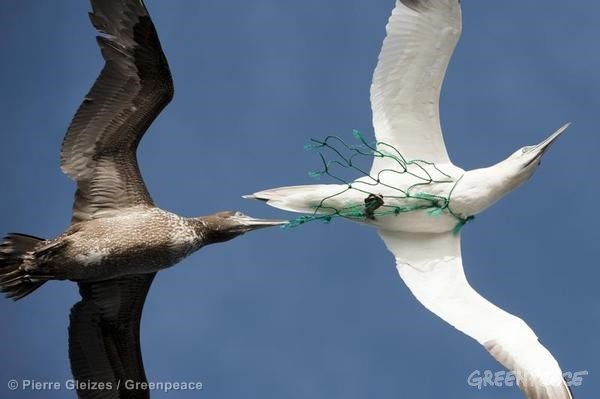
A turtle found dead in Hawaii had over a thousand pieces of plastic in its stomach and intestines. It has been estimated that over a million seabirds and one hundred thousand marine mammals and sea turtles are killed each year by either eating or getting tangled in six-pack plastic can holders and discarded netting, fishing lines and other bits of discarded plastic.
Chemical sponge
Plastics can also act as a sort of “chemical sponge”, concentrating many of the most damaging of the pollutants found in the world’s oceans: the persistent organic pollutants (POPs). So any animal eating these pieces of plastic debris will also be taking in highly toxic pollutants.
Ocean hitchhikers
Bits of floating plastic can also provide easy transport for plants and animals to move into oceans beyond their normal habitat – these alien species often causing major problems by disturbing the natural balance of the ecosystem.
The North Pacific gyre is one of five major ocean gyres. The Sargasso Sea is a well-known slow circulation area in the Atlantic, and research there has also demonstrated high concentrations of plastic particles present in the water – it’s own Trash Vortex. The Sargasso Sea is home to a rich selection of marine life including fish, turtles and whales and is the breeding ground of the European eel. The Sargasso Sea one of the areas identified by Greenpeace that should be protected as an Ocean Sanctuary.
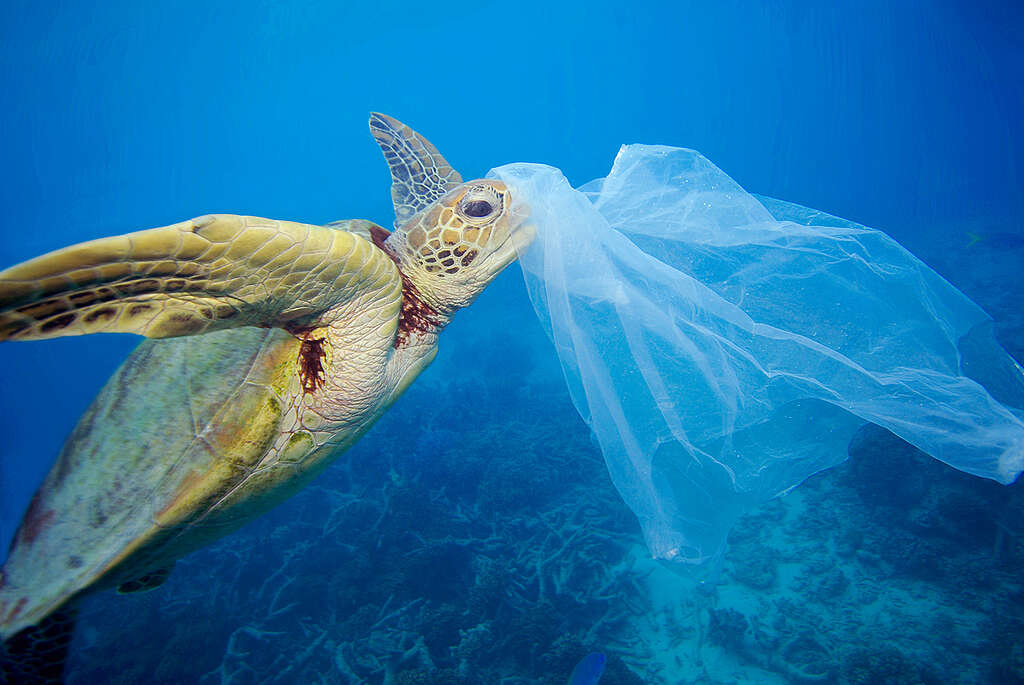
Governments around the world are now negotiating a Global Plastics Treaty – an agreement that could solve the planetary crisis brought by runaway plastic production. Let’s end the age of plastic – sign the petition for a strong Global Plastics Treaty now.
Sign petition