Skip to content

Help protect our homes before it’s too late

Please donate now to help Greenpeace put an end to deforestation by 2030.

breaking! monumental win for forests and wildlife

Together we’ve tirelessly campaigned and new nature laws have finally been agreed on. Now we must ensure that they don’t get weakened by greedy corporate interests and hold the government to account to deliver.

This is our chance to protect iconic species like koalas and quolls and finally put an end to global deforestation by 2030.

When forests fall, animals vanish

Deforestation is still rampant around the world. From the Amazon to Borneo, the Congo, and here in Australia, forests are being destroyed by greedy corporations at an alarming pace. 

More than half of the world’s tropical forests have already been lost. Every tree lost tears apart wildlife homes, fuels the climate crisis, and threatens local communities.  

Right now, Greenpeace is fighting for forest protection locally and globally.
 
In Australia, we've been pushing for stronger nature laws. These have the power to stop corporations from smashing down Australia’s forests. If an operation harms nature, it could now be stopped in its tracks.
 
Globally, we are pushing governments to agree to a Forest Action Plan that paves the way to, not only stopping, but reversing deforestation by 2030. 

We have what it takes to stop the destruction, but we must act now.

When forests fall, animals vanish

Orangutan

Deforestation is still rampant around the world. From the Amazon to Borneo, the Congo, and here in Australia, forests are being destroyed by greedy corporations at an alarming pace. 

More than half of the world’s tropical forests have already been lost. Every tree lost tears apart wildlife homes, fuels the climate crisis, and threatens local communities.  

Right now, Greenpeace is fighting for forest protection locally and globally. In Australia, we’re demanding stronger nature laws. Shockingly, the current laws allow agricultural companies to legally clear forests for cattle and logging, putting iconic species like koalas and quolls at risk of extinction. 

We have what it takes to stop the destruction, but we must act now.

Will you protect the animals
on the edge of extinction?

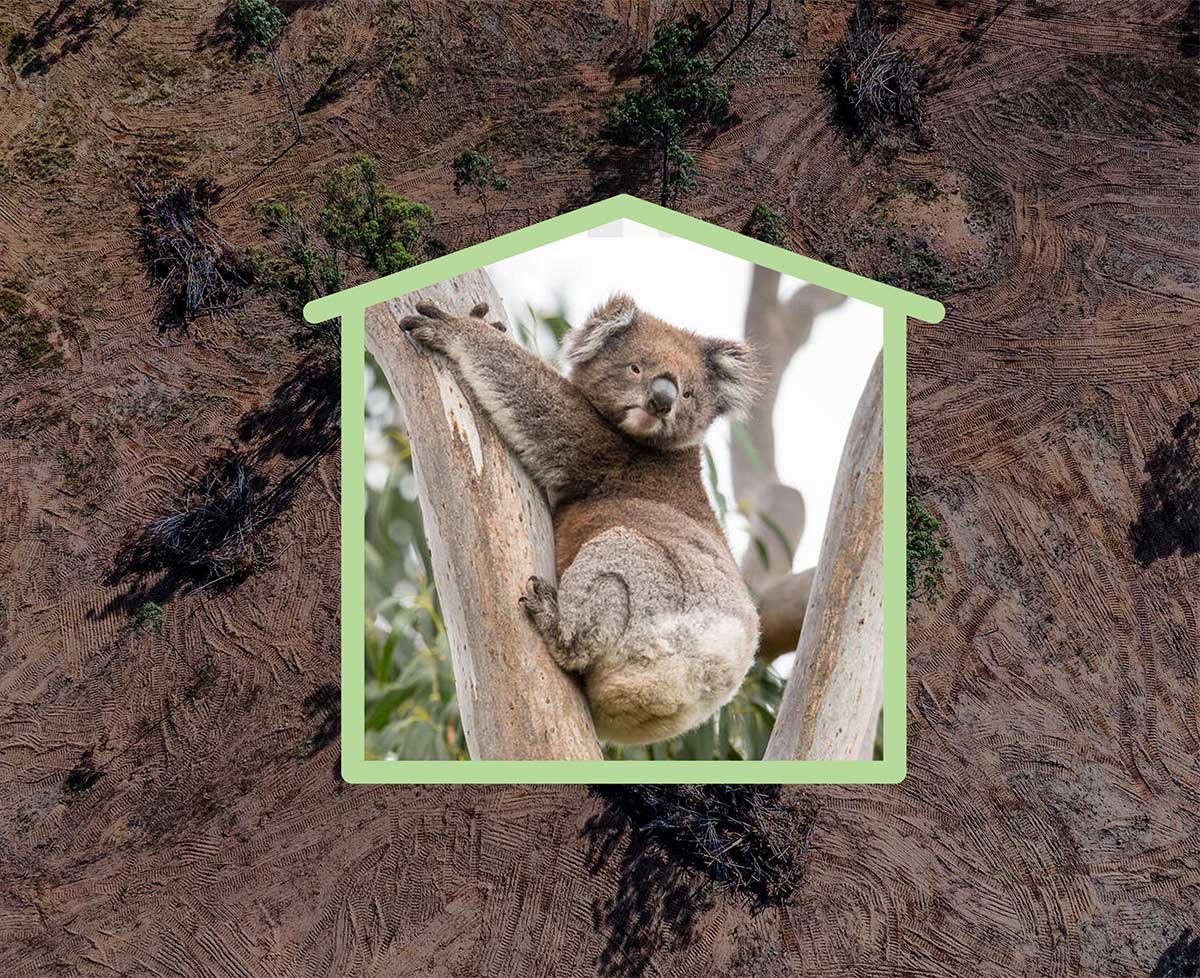
Koala on top of image of bulldozed land clearing in Queensland

KOALA

STATUS: Endangered/Vulnerable

Bulldozing trees is destroying vital koala habitat, leaving them with fewer eucalypts to feed and shelter in, threatening their survival. Each year, an area 450 times the size of Sydney’s CBD is bulldozed for beef production.

Mainland Spotted-Tail Quoll

MAINLAND SPOTTED-TAIL QUOLL

STATUS: Endangered

A nocturnal predator vital to healthy forests, quolls control populations of insects, rodents, and other small animals. Deforestation disrupts their habitat, leaving them vulnerable.

Jaguar

JAGUAR

STATUS: Near threatened

This apex predator roams vast territories across the Amazon. When forests are destroyed, jaguars lose the space to hunt and breed, pushing them closer to extinction.

Toucan

TOUCAN

STATUS: Near threatened

With their rainbow beaks and playful calls, toucans are icons of the Amazon canopy. But when forests fall, their nesting hollows vanish too.

Bornean Orangutan

BORNEAN ORANGUTAN

STATUS: Critically endangered

Every tree cut in Indonesia’s rainforests tears apart the orangutan’s home. Deforestation is leaving these gentle great apes with nowhere to go.

Sumatran Tiger

SUMATRAN TIGER

STATUS: Critically endangered

As Indonesia’s rainforests fall to chainsaws and flames, the Sumatran tiger’s world is disappearing. With every stretch of forest lost, these solitary hunters are left with less space to roam, hunt, and raise their young.

Grauer’s Gorilla

GRAUER’S GORILLA

STATUS:

Grauer’s gorillas live deep in Congo’s forests, relying on thick vegetation for safety and food. Ongoing deforestation is shattering their habitat and threatening their survival.

Help protect these precious species and the forests they call home.

Australia has the world’s highest mammal extinction rate driven largely by deforestation

With species found nowhere else on this planet, we need to end deforestation by 2030 to protect vital habitats and the animals we love.

Greedy corporations are tearing down our forests

Global giant JBS executives

Global deforestation is fueled by corporate giants, such as JBS. Their supply chains are linked to the destruction of the Amazon and are major players in Australia's deforestation-ridden beef industry. You may not know JBS but you likely know their popular brands: Primo Foods and Huon Salmon.

While they profit, jaguars, macaws, and entire ecosystems vanish, and the climate crisis worsens. The Amazon has already lost 17% of its forest due to deforestation. If we reach 20-25%, we could pass the point of no return.

This hidden deforestation crisis won’t stop unless we hold corporations like JBS to account and push governments to regulate their activities.

Greenpeace investigations exposed “cattle laundering” where cattle from illegally cleared land are sent through other farms to hide their origin before being sold.

We cannot let environmental crimes happening each day go unchecked. 

Please donate now.

Help push Australia to lead the way now

With your help Greenpeace is urging our government to lift its game on forest protection locally and globally.

Our government has just made an agreement to overhaul 25 year old nature laws which were so flawed they allowed deforestation to be legal. Now we have a chance to lead the way and show the rest of the world what real forest protection looks like.

We’re playing an active role to ensure these reformed laws tackle the deforestation crisis and safeguard iconic wildlife.

On the global front, we’re pressuring leaders to commit to end deforestation once and for all.

We cannot harness this historic moment without your help.

The fight for forests is the fight for animal survival